From Support to Sovereignty – The Homeschooler’s Path to Maths Mastery
From Support to Sovereignty – The Homeschooler’s Path to Maths Mastery
One of the most rewarding aspects of the homeschooling journey is watching a child transition from needing constant parental guidance to achieving total academic sovereignty. In the early stages of home education, a parent often acts as the primary source of information, explaining every new concept and correcting every mistake. However, as the student matures, the goal shifts toward developing independent thinkers who can navigate their own learning paths. Achieving high-level numeracy is a critical part of this evolution. When a student can manage their mathematical development autonomously, they gain a sense of confidence that extends far beyond the kitchen table.
The path to independent numeracy requires more than just willpower; it requires the right digital infrastructure. For a child to work alone, they need a resource that is intuitive, adaptive, and inherently motivating. Relying solely on textbooks often leads to “bottlenecks” where the student must stop and wait for a parent to explain a difficult section. By contrast, a gamified, interactive environment allows the student to push through challenges in real-time. This sovereignty is essential for a peaceful homeschool household, as it allows the parent to focus on other tasks while the child makes meaningful progress on their own terms.
The Essential Scaffolding for Independent Numeracy
Independence does not mean a lack of support; rather, it means the support is built into the system itself. For a student to thrive in an independent study session, the curriculum must be scaffolded. This means starting with what the child knows and gradually increasing the difficulty as their numeracy improves. If the jump in difficulty is too high, the child will become frustrated and seek help; if it is too low, they will become bored and disengaged.
Maths Invaders Online is designed with this specific psychological balance in mind. The software serves as a constant mentor, adjusting the complexity of the equations based on the student’s performance. This ensures that the student is always working at their “frontier of learning,” where they are challenged but capable. Because the platform provides a structured path, the student always knows what to do next. This clarity is the key to building independent numeracy habits that last. You can explore how these adaptive levels are structured to support self-directed learners on our Maths Invaders Online page.
Turning Mistakes into Milestones
In a traditional teaching model, a mistake can feel like a stop sign. In an independent learning model, a mistake should be a stepping stone. To build resilient numeracy skills, students need to be in an environment where they can fail safely and try again immediately. When a child is working through a space-themed mission in Maths Invaders, an incorrect answer isn’t a failure—it’s just a tactical error that needs correcting to save the base.
This shift in perspective is vital for the homeschooler. It removes the emotional weight often associated with “getting it wrong” in front of a parent. The meta title for this guide is From Support to Sovereignty: The Homeschooler’s Path to Maths Mastery, and it represents a move toward a more resilient form of education. When children use these tools, they develop the “grit” required to solve difficult problems without looking to an adult for the answer. If you are interested in how to foster this mindset in your home school, our contact page is available for any questions regarding our pedagogical approach.
Using Data to Inform the Mentor Role
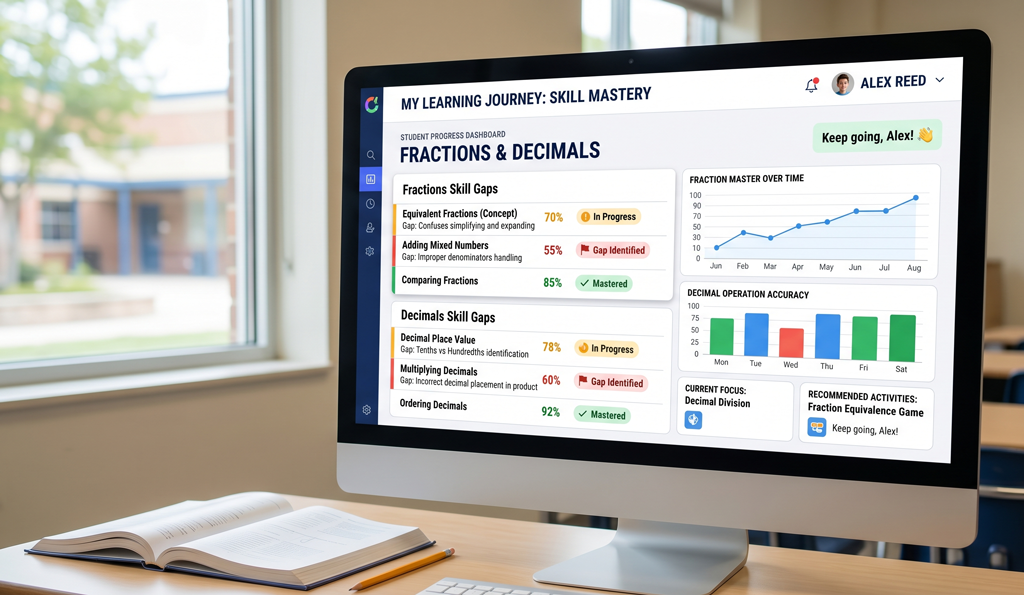
Even when a child is learning independently, the parent still plays a vital role as a mentor and strategist. To do this effectively, you need an objective number check on their progress. You shouldn’t have to hover over their shoulder to know if they are succeeding. Modern digital tools provide comprehensive reports that show you exactly where the student is spending their time and where their numeracy is strongest.
These reports are an essential part of the homeschooling toolkit. They allow you to have a weekly “check-in” with your child to celebrate their wins and identify any areas where they might need a targeted, one-on-one lesson. This data-driven mentorship is far more effective than traditional grading. It allows you to stay aligned with the Australian Curriculum while giving the child the space they need to grow. Many families have found that this balance of independence and oversight is the “sweet spot” for academic success; you can read more about these experiences on our Google Business Profile.
The Long-Term Benefits of Self-Regulated Learning
The ability to self-regulate and manage one’s own study time is one of the best predictors of success in higher education and the modern workforce. By encouraging independent numeracy practice now, you are preparing your child for a future where they will need to be lifelong learners. When a child learns that they can master a difficult subject like maths through their own effort and the right tools, they carry that confidence into every other area of their life.
Creating an Environment of Mastery
To support this transition to sovereignty, it is helpful to provide a dedicated space and time for independent work. When the child knows that their twenty-minute session on Maths Invaders is their “mission time,” they take ownership of it. This regularity helps to cement the skills and ensures that their numeracy remains at its peak. As they clear sectors and earn galactic rewards, they are proving to themselves that they are the masters of their own education.
Conclusion
The journey from support to sovereignty is one of the most exciting parts of homeschooling. By providing your child with high-quality, engaging, and curriculum-aligned tools, you are giving them the freedom to flourish. Maths Invaders Online turns the development of numeracy into an independent adventure that students truly enjoy. When you step back and let the child take the lead, you’ll be amazed at how far—and how fast—they can go.
As students progress beyond the foundational basics, the requirements for effective spelling instruction shift from simple sound–letter matching to a more complex understanding of word
The journey through the September 2025 Literacy Hub Phonics Progression begins with the critical transition from the Foundation Year into Year 1. During the Foundation