Why Traditional Worksheets Often Fail and Games Succeed
For decades, the standard approach to mastering mathematics has been the paper-and-pencil drill. Most Australian adults can recall the sight of a black-and-white worksheet filled with rows of near-identical equations. While these tools were designed to provide necessary practice, modern educational research reveals that they often fall short of creating long-term engagement or deep understanding. In many cases, traditional worksheets can actually contribute to the very anxiety they are meant to solve. To move toward a more effective model, many educators are turning to online courses that integrate game-based learning. When we compare the two methods, it becomes clear why games succeed where paper drills often fail to inspire the next generation.
The primary issue with a standard worksheet is its lack of interactivity. A piece of paper is a static medium; it cannot respond to a child’s effort or provide guidance when they take a wrong turn. This leads to a “delayed feedback loop,” where a student might complete twenty problems incorrectly and not realise their mistake until the work is marked days later. By then, the faulty logic has already begun to set in. High-quality online courses solve this by providing instant, corrective feedback. In a game like Maths Invaders Online, the result of every calculation is immediately visible, allowing the student to learn and adjust in real-time.
The Cognitive Difference Between Drills and Play
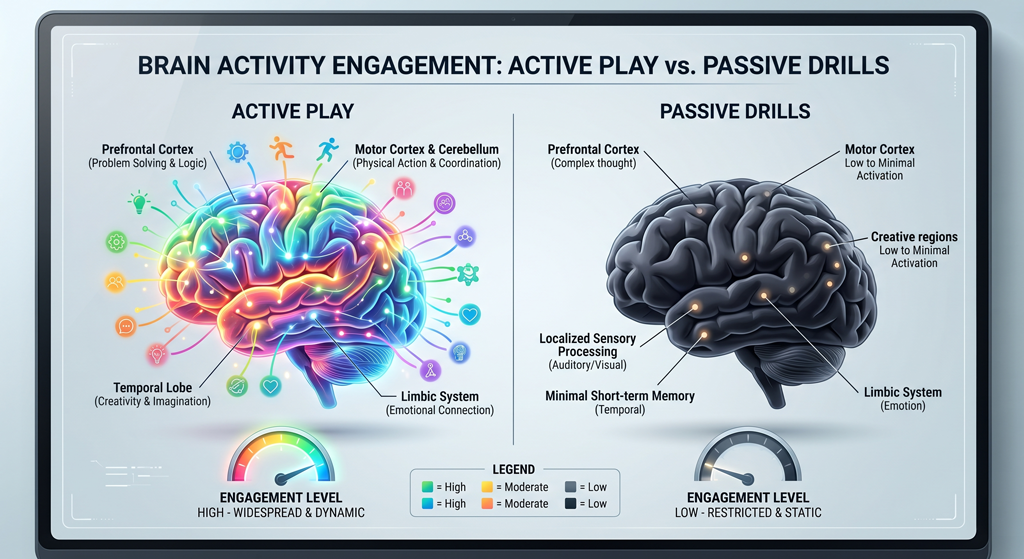
Human brains are naturally wired to learn through play and challenge. When a child engages with a worksheet, the cognitive task is often limited to “compliance”—simply finishing the task to satisfy an adult. This passive engagement rarely leads to deep retention. In contrast, game-based online study taps into the brain’s reward system. Every cleared level and every earned badge triggers a release of dopamine, which reinforces the learning and makes the student want to return for more. This is the difference between “have to learn” and “want to learn.”
Maths Invaders Online takes this a step further by wrapping the practice in a compelling narrative. Instead of just “doing sums,” students are defending a base or exploring the galaxy. This context provides a reason for the mathematics to exist. It turns an abstract chore into a purposeful mission. When the brain is actively engaged in a mission, it is more likely to store information in the long-term memory. You can see how we build this engagement through our curriculum-aligned missions by visiting our Maths Invaders Online page.
Addressing the “Wall of Numbers” Anxiety
For a child struggling with confidence, a full page of equations can look like an insurmountable wall. This visual overwhelm is a major trigger for maths anxiety. Traditional worksheets often provide too much information at once, leading to cognitive overload. Well-designed online courses manage this by using “scaffolding.” They present one challenge at a time, ensuring the student is successful before moving to the next. This prevents the child from feeling defeated before they have even started.
The meta title for this guide is Why Traditional Worksheets Often Fail and Games Succeed, and it highlights a fundamental shift in pedagogy. We want to move away from “quantity of problems” and toward “quality of engagement.” By using game mechanics like limited lives or timed challenges, we can create a sense of urgency that builds focus rather than fear. If you are looking for advice on how to replace paper drills with more effective digital options, our contact page is the best place to start. We can help you tailor your online courses to meet the specific needs of your students.
Personalisation vs. The “One Size Fits All” Model
A worksheet is usually the same for every student in the room, regardless of their individual ability. This means that for some, the work is too easy and leads to boredom, while for others, it is too hard and leads to frustration. Neither state is conducive to learning. Modern online courses use adaptive technology to ensure that every student is working at their “frontier of learning.” This personalised approach is nearly impossible to achieve with paper-based methods.
Maths Invaders Online monitors the speed and accuracy of every response. If a student is breezing through their addition facts, the game naturally increases the difficulty. If they hit a snag, it provides more practice at that level until mastery is achieved. This ensures that every minute spent in an online study session is productive. For more evidence on how this personalised approach outperforms traditional methods, you can read the latest research summaries on our Google Business Profile. The data consistently shows that students using interactive tools achieve fluency much faster than those using traditional drills.
Maintaining Alignment with National Standards
While games are fun, they must also be rigorous. Some parents worry that moving away from worksheets means moving away from “real work.” However, high-quality online courses are built directly on the Australian Curriculum. Every game level corresponds to a specific learning outcome, ensuring that the student is always building the skills required for school success. The “Galactic Campaign” in Maths Invaders covers everything from basic number sense to complex percentages, providing a comprehensive alternative to the standard workbook.
Conclusion: Embracing the Future of Learning
The era of the static worksheet is coming to an end. To prepare Australian students for the challenges of the future, we must provide them with tools that are as dynamic and interactive as the world they live in. By integrating online courses that use game-based learning, we can turn a subject that many fear into a subject that many love. Maths Invaders Online provides the perfect balance of fun, feedback, and formal standards, ensuring that every child has the opportunity to succeed. This year, let’s leave the paper drills behind and embark on a mission for true mathematical mastery.